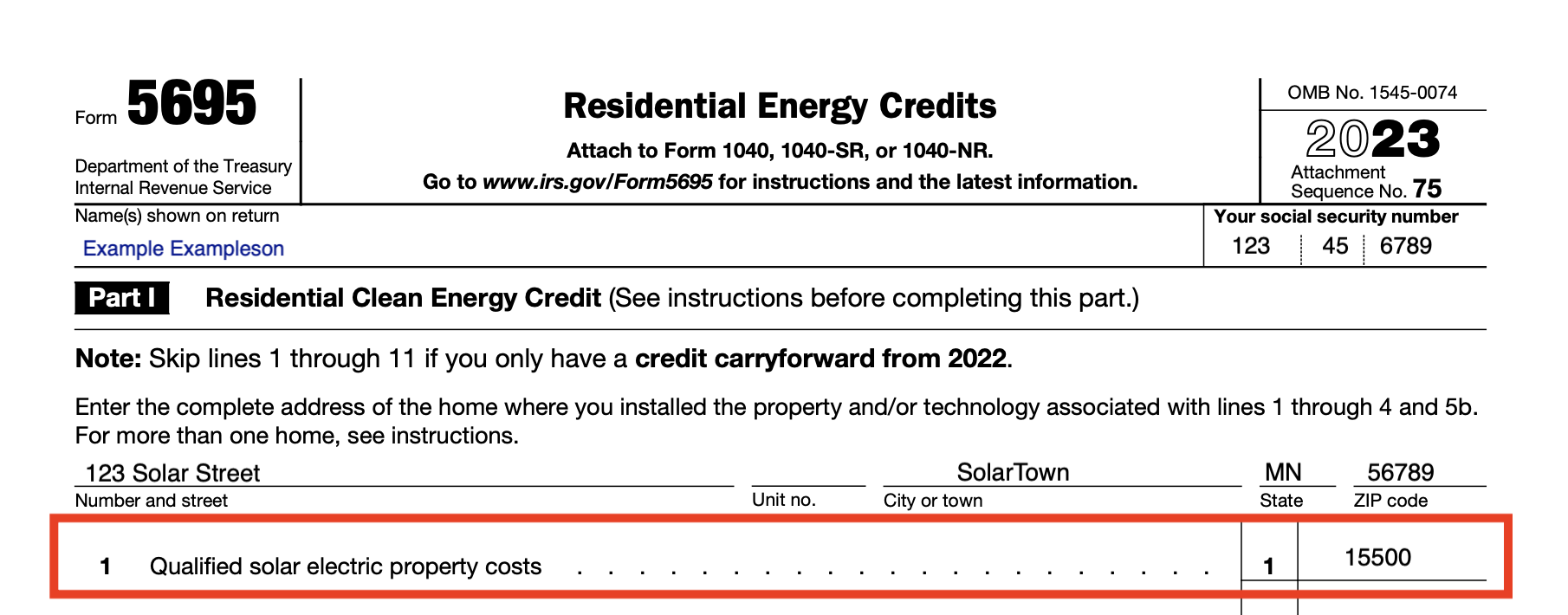
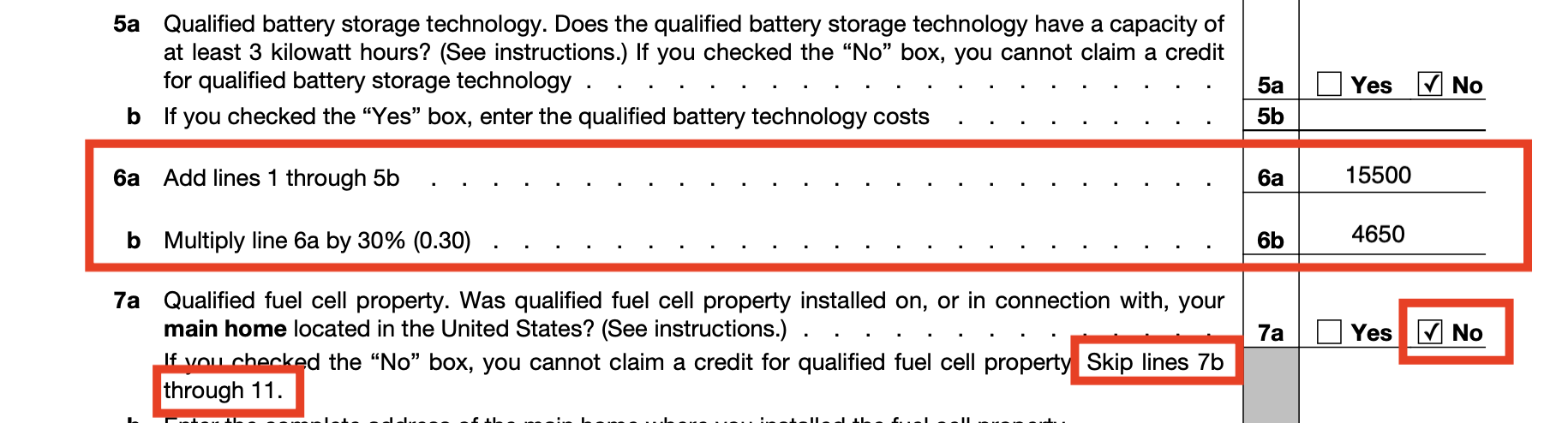
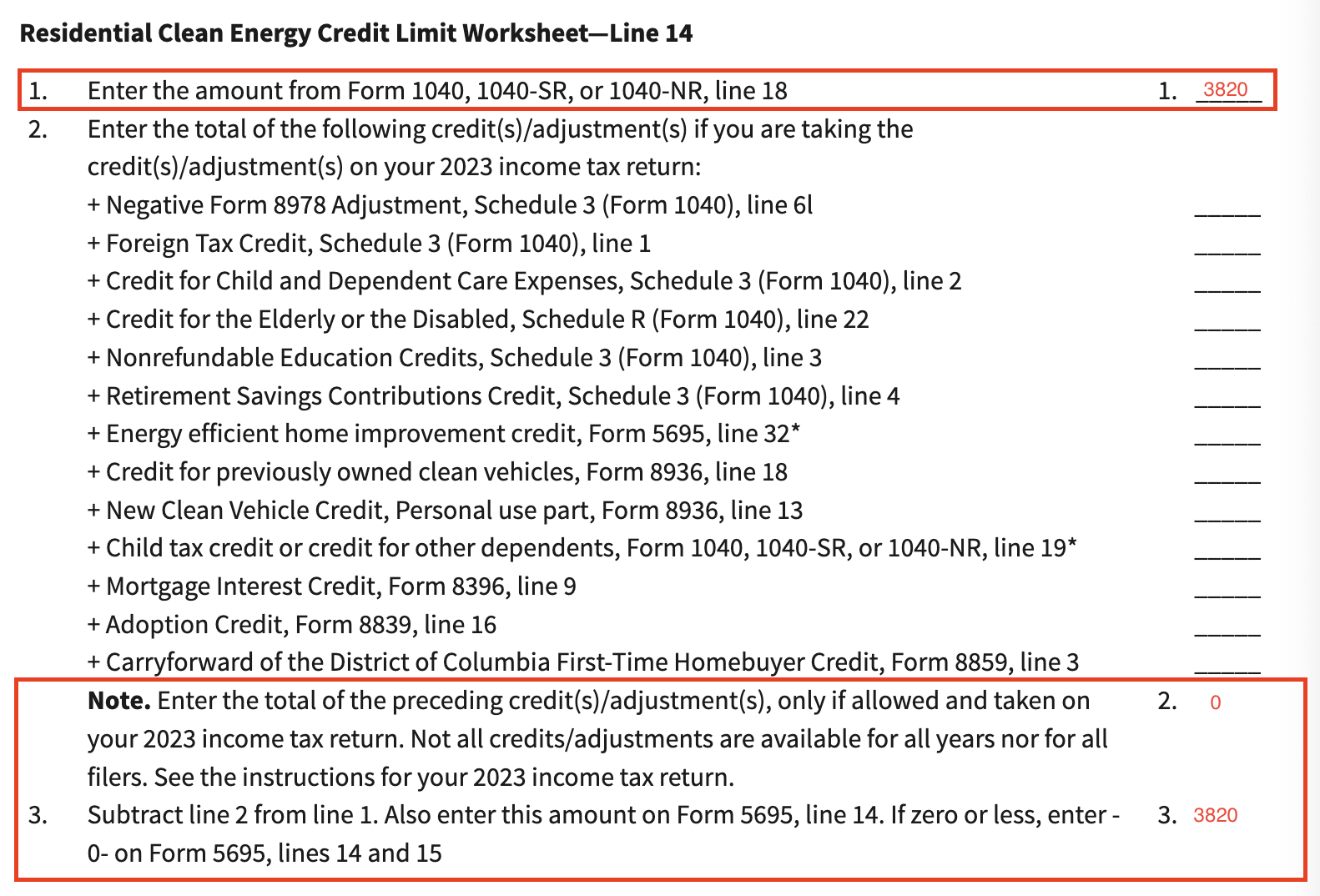
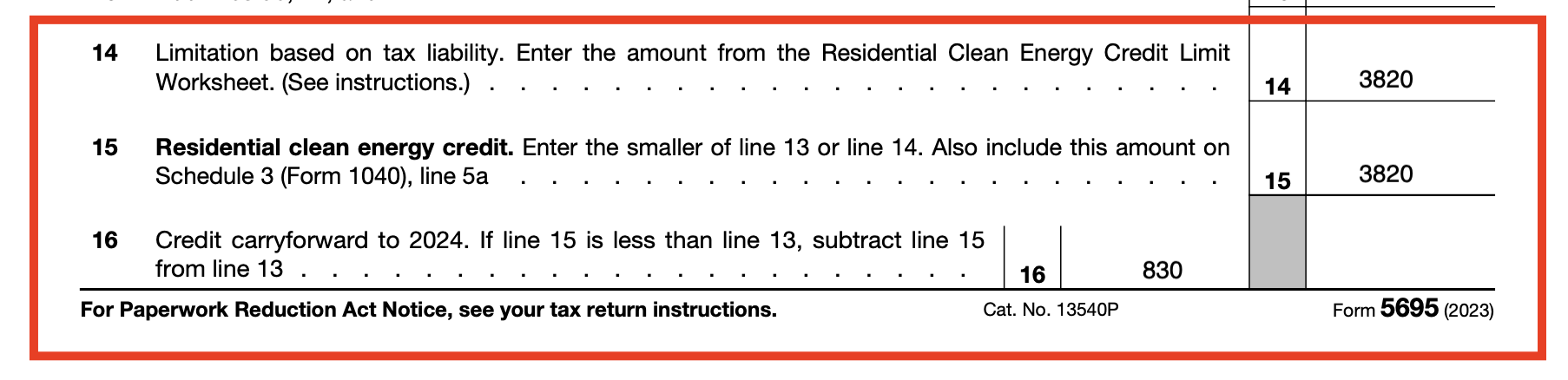
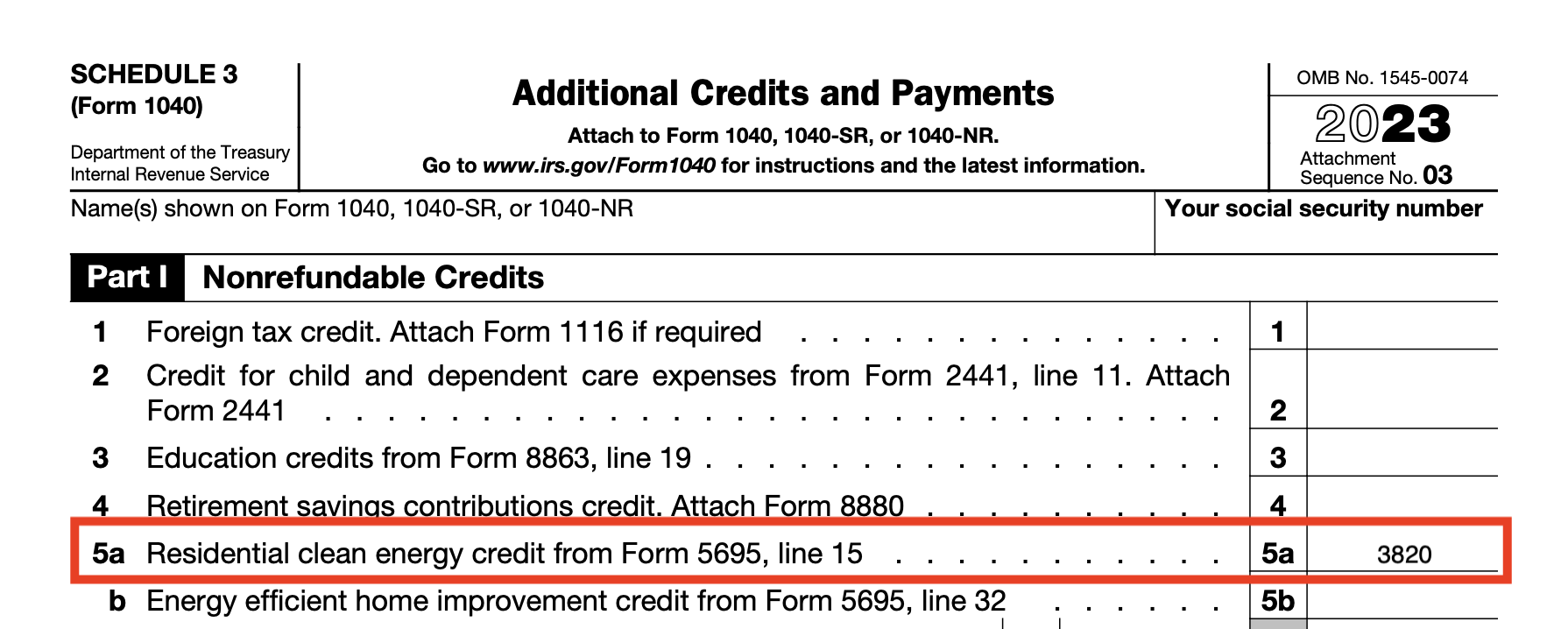
Carl writes to us that his tax preparer doesn’t know how to apply for the 30% Federal Tax Credit.
We’ve answered part of this question before about how to calculate the 30% Federal Tax credit, but we’re going to go the extra mile and actually give all our beautiful solar people the IRS forms. Send them over to your tax preparer and tell them to give you a discount. No need to thank us. Just buy us a beer next time you’re in the neighborhood, or let us sleep on your couch when we’re in your neighborhood.
For products “placed in service” in 2009, you need to file the 2009 IRS Form 5695 and submit it with your 2009 taxes (by April 15, 2010). On the 2009 1040 form, the residential energy tax credit (from Form 5695) is claimed on line 52.
“Placed in service” means the year your solar system was up and working on your roof. It doesn’t mean when you put down your deposit. Similarly, for products “placed in service” this year in 2010, you’ll take the tax credit on your 2010 income taxes.
Thanks for the question, Carl! You rock for going solar!
If you like this then you may also like these:


If you would like to see 50% of the first $25,000.00 in tax credits then please call Percy Watson at 601.359.3343 and let him know to pass SB 2444.
Thank you
We just had four 4×10 solar hot water panels (closed loop glycol system with heat exchanger) installed to heat the water for our radiant floor winter heating system. I downloaded the 2010 IRS solar credit form “draft” to see what we needed to fill in for our credit. There was no mention of solar space heating, just for solar hot water and I thought if I put in the high cost of the whole system it would raise a red flag. I called IRS to find out how to claim my credit for the space heating system. No one at IRS seemed to know anything about such systems. Anyone have any info regardign this?
Karen, this is a shame that you can’t get a straight answer from the IRS. Far be it from us solar geeks to contradict the IRS tax geeks. That being said, I would consult your tax adviser to see if it counts. My understanding was that only heating pools and jacuzzi’s weren’t eligible. I thought that space heating was fair game, but I’m sorry I can’t be firm about that, especially if the IRS isn’t sure. That actually may be a good sign and that they’re open to that radiant heat interpretation. Again, please consult your favorite tax geek. Thanks.
Is there a tax credit if I use solar energy in industrial facility (not home)
What are the tax credit in case of using solar energy to produce heat or power or cool in a factory ?
Thank you
ET,
Industrial, commercial or residential, as far as I understand the Federal ITC (investment tax credit) with the above guidance, if it’s solar, whether solar thermal (for hot water or space heating/cooling) or solar PV (electric) you will get a 30% tax credit off the installed cost. 99% sure about that. Has to be installed by 2016, however. Go for it.
what if my fed tax credit is more than taxes I owe for the year 2010? My estimated fed tax cred would be around $6,000, I also bought another home and expect to receive a tax credit as a second timed buy of $6,500, my taxes will be far less than either tax credit. My understanding is that the home buyer credit will be a check for the remaining amount, but what about the credit for the solar? My taxes, will only be about $2000, (I’m retired) and if the solar tax credit is a cash deal then I will go ahead with the solar install, but if I only get a credit against my smaller tax bill then I won’t. Thanks for the answer, Dan
I did find a mention in a blog that even though the cap was removed for solar tax credits that there is still a $2,000 cap on the solar hot water systems. But I am still working on getting an answer from IRS regarding space heating with solar heated water. Any news in that area from anyone else would be appreciated
Karen, I’ve looked into this also and from what I can tell the IRS doesn’t make this clear yet. I’m in the same boat. We are installing a radiant-tubing solar heat system. Since there is no guidance document that excludes the tubing as a part of the system I have to conclude that we are in the gray area and you should take the credit for it’s full amount. Please continue to comment here if you learn more.
Hi all, I just spent an hour and a half on the phone with a wonderful IRS Energy Credit Specialist. He is sending my questions regarding residential solar space heating tax credit to the IRS “Research” Dept. I hope to have a more definitive answer in a few days. One thing I pointed out to him was that there is already a tax credit for solar space heating available for Commercial but so far nothing clear on residential. He said there was hope since the intent of the law might have meant to include that also in residential but since the cost was so high that perhaps they thought only commercial entities would actually do solar space heating. But he said that reading the law it says that the tax credit can be given for solar heated water use “IN THE HOME”, i.e. for showers, dishwashing clothes washing etc. and he felt that heating the house would constitute a way of “using” hot water. I said that I did not worry too much that the four panels that we had installed would qualify, what I wanted to add to the cost was the materials for the radiant floor system. We did all the labor ourselves so there was no labor charges added to that figure. The term “Energy Storage Medium” device came up as he thought that the radiant floor portion of the system might be considered a storage medium and energy storage mediums are not qualified (Except that, ironically, a hot water tank is qualified to be considered if it is part of a solar hot water system.) I explained to him the physics of radiant floor heating and that it is not the tubes that are storing the heat, but the 6 inch concrete slab and insulation under the slab, and he thought I might have a case to claim the radiant floor tubing, pumps, valves, thermostats etc. I will report back as to what “IRS Research” tells me in a few days. Bottom line, you can try to claim it all and if it is denied you can ask for an EXAM, and if that is denied you can Petition the tax court. If the tax court approves it, it would become law, applying to all, which it should be. Another avenue would be a “Private Letter Ruling” which costs up to $300 and if approved would only apply to the petitioner’s case. However, several people can join together and make a joint private letter ruling appeal and divide the cost.
Another great thing this IRS guy did was to guide me to a location on irs.gov web page where an e-mail can be sent instead of waiting on hold 30 minutes on the phone for a live person. He told me I should wait until I heard back from research and then if I didn’t like what I heard I could keep plugging the question back at them arguing the case using the e-mail. He was really on our side and a great help. I took his full name and ID # down for reference and since he spent so much time and documented my questions I might be able to pick up where I left off with him instead of starting all over again.
In any case to get an e-mail answer to this question or any other go to http://WWW.IRS.GOV, click on “Site Map” at the top right, scroll down to “Help w/ tax questions” then use the category “Child Care Credits/ or Other Credits” since this is another credit.
Hope this helps all those out there trying to get a credit on Solar Space Heating with Radiant Floor systems.
Karen,
Thanks so much for sharing your helpful IRS experience. We look forward to your next update!
Warm regards,
- Dan
Well, it is not good news so far. I was so hopeful with the live agent’s discussion with me. However, this was the response I got from a jerk at the IRS Research Dept…..
“There is not any specific reference for solar water heater used for use other than a system that heats water for use. If the costs include a separate charge for heating the house and not just heating water, or a storage medium, then those additional costs would not be qualifying costs for the credit. You would have to do an allocation of the costs to determine the credit amount. I hope this addresses your tax inquiry.”
UNBELIEVABLE! I go from trying to get a credit for the entire solar/radiant floor system and am now being told that I might not even get credit for the four panels, but only for one. Of course, I then went to the IRS e-mail question form that the first agent told me to use as many times as it took to get a good answer, so I am starting over. In my e-mail question I stating that the law only says that the hot water must be “used in the home”. I can understand that they would deny a swimming pool or hot tub use of the hot water, but nowhere in the law does it spell out that the water can only be used for bathing and washing dishes and clothing. I stated that my use for the hot water used in my home would include heating the house and that I would like to claim the entire system (and did not say – but I do intend on fighting for the credit if it gets denied.) Will keep you all posted when I hear more.
Not to many people were aware of this tax credit I don’t think.
If I had a $1500 rebate for 2009,for a new metal roof on my house, can I still get a rebate for a solar system installed in 2010?
Thank you for all the great information you provide in your website.
I received a Utility Solar Incentive payment for my solar system that became operational in December 2010. Now in January 2011 I received a 1099-Misc for 2010 from the utility, which means the utility incentive payment has to be included in my annual income and I have to pay income tax on it. Since this is an incentive and not a rebate, can I take the full/total cost of the system (utility incentive plus my costs) towards the 30% Federal tax credit?
Yes. If you were directly given the rebate (not given to your installer) then you can take the full 30%, from our understanding. If the installer got the rebate money directly, then the 1099 should have gone to the installer, and you should take 30% off your cost after the rebate is subtracted.
For Solar Fred I had a solar panel installed on the roof of my travel trailer in Feb 2010. I live in this trailer about 75% of the year. Can I get the tax credit for the equipment and the labor to install this system? Moe
solar space heating and cooling
I am building a tiered solarium to provide heat for the house and studio.
Recently, i built a small(6×12) solarium on the south side of the house and during sunny days, use the heat from it to heat 1/2 the house–it’ll kick up over 80 degrees for 4-6 hours. I then blow that hot air into the house’s ductwork and it warms the structure to 70 degrees. I also put a solar chimney at the peak of the upstairs living room and when open it immediately dropped the temperature in the house 10 degrees(from 80 to 70)with that in place, we only use the air conditioner to dry the air during especially humid times.
Based on those successes, I’m building the larger unit, the heat from which I’ll blow down to heat the cellar/shelter under the garage which is 4 ft lower than the living spaces. (it will also have a solar chimney to vent excess heat during the summer)
I’m guestimating gaining almost 1 million BTUs 4-6 hours/day and using it to heat the thermal mass—this may do over 70% of all heating needs–The ecological and aesthetic benefits will enrich my ecological soul, but being a reasonably practical man, i gotta ask…
Are there any tax incentives for this approach that any of you have found?
Whomever:
I have recently April 21,2011, purchased a Solar Water heater for my home. A representative told me a Fed. Tax credit would be apply until used up, to a possible 5 years.
My tax preparer tells me there is a limit of 1 year.
I am also waiting for a solar electric system to be installed. That representative also said the tax credit was good for 5 years.
Where can I find the Fed. Tax. Credit Information that verifies these statements?
Jerry, 5 years is correct. That is, the credit can be carried over for 5 years for solar hot water or solar electric.
A good summary of all the rules is here:
http://www.dsireusa.org/incentives/incentive.cfm?Incentive_Code=US37F&re=0&ee=1
If you want it from the horse’s mouth (The IRS) scroll down to Authority 2, and enjoy the IRS speak directly.
KAREN
Your system definitely qualifies for the 30% tax credit. I don’t know who you talked to but I have attached the link to the law that includes solar hot water for the purpose of heating a home. Here is the exact wording,
“3) Energy property. For purposes of this subpart, the term “energy property” means any property–
(A) which is–
(i) equipment which uses solar energy to generate electricity, to heat or cool (or provide hot water for use in) a structure, or to provide solar process heat, excepting property used to generate energy for the purposes of heating a swimming pool,”
If you read it without the parenthesis it says equipment which uses the sun to heat or cool a structure, or to provide…
This is from
UNITED STATES CODE TITLE 26.
INTERNAL REVENUE CODE SUBTITLE A.
INCOME TAXES CHAPTER 1.
NORMAL TAXES AND SURTAXES SUBCHAPTER A.
DETERMINATION OF TAX LIABILITY PART IV.
CREDITS AGAINST TAX SUBPART E.
RULES FOR COMPUTING INVESTMENT CREDIT
26 USC § 48
Here is the link, this is cut from the top 25 lines of the law or so.
http://www.dsireusa.org/documents/Incentives/US02F.htm
Hope this helps.
I would like to install PV panels on my home. It is legally deeded to my father but I live there rent free because I am taking care of him. He lives in his own house next door and has so little income he does not even have to file so the credit does him no good. The 5695 form says that the 30% tax credit does not have to be on a principal residence. Can I legally claim the credit? I guess it boils down to the legal definition of home. There is so much detailed guidance in the special instructions for 5695 and it only says ‘home’ and not that you have to own it.
Is a rose by any other name still a rose here? thanks.
That’s a great question…but one I can’t really answer. It’s a nuance that’s a job for the tax pros and you friendly, local, IRS agent, I’m afraid. I will say that law makers often make these rules vague, in order to have these sorts of situations, allowing for the most number of people to benefit. Wish I could be of more help.
I am considering getting solar panels. The solar company is saying that I can amend my taxes from 2010 to claim the credit. I only see that you can only claim it in the year that they are installed. Am I correct in thinking that I would have to claim it on my 2011 taxes since that is the year it is installed.
I have no use for a tax credit does anyone know if you can sign your 30% tax credit to a 3rd party like a family member or a friend?
Do you know if the 30% tax credit can be used in multiple years until 2016? We would like to install solar one year (or three) and geothermal another year. Can a person get the tax credit for each year solar or geothermal is added, or do we save our money and have it all done in 2016? THANK YOU!
I’m being told by a solar company that installing 3 out of 20 panels in december 2011 would qualify the entire system for the tax credit in April 2012.
I was under the impression the entire system needed to be operational. Can anyone clarify?
Thanks.
I was hoping that Karen Daniels had clarification about using her panels for space heating. Anyone know anything more about this or how to phrase your tax credit to include the cost of panels even if they are used for home space heating?
My parents are about to install solar panels and NYC has a property tax rebate of 20% spread out over 4 years however rebate expires at the end of 2012 and after all the things that need to be done the panels will be installed in november so will we still be able to claim the 4 years worth of property tax rebates or will it be for only one year? Also do you think solar contractors rip people off cuze I saw the same inverter he mentioned solar power US-3000 for around 1200-1500 USD wholesale and he is selling it for 2500??????
OK Tor, “you’re the man!” when it comes to these types of questions, so here goes….if I buy a solar electric pool pump system does it qualify for the 30% Federal Tax Credit?
How long does a solar customer have to use his tax credit.(2016?)
2016 – I suppose there’s a tiny chance that could change but so is there with any policy or tax code I guess.
Cheers,
Dave
Good Morning,
I’m interested in putting a solar system on our RV which will allow us to be off the grid on a more full time basis. Am I allowed to bring the system together over the entire calender year 2013 or do I have to do the complete purchase and install all at once? It’s expensive and can be completed within the year but I’m interested in “paying as I go”.
Thank you very much!
Here is a question I hope someone can help us with. This applys to a potential solar customer who needs some clarrification on the 30% tax credit for which we can not find a definitive answer and am hoping someone can help.
We are proposing a 14.21 kW roof mounted solar PV system using the roof of her main house (primary residence) as well as the roof of her guest cottage. The guest cottage is used for guests of hers but she does rent it out weekly June-September. Both houses are on the same property (same map & lot) and are owned solely by her. The meter for the guest cottage is also the meter for the in ground swimming pool. The system we have designed for her will take care of 100% of her electricity for the main house, guest cottage and pool.
Our question is: Will she be eligible to receive the 30% tax credit on the entire cost of the system or only that portion which goes to her main house residence? If she is not eligible for the guest cottage, could she change that by residing in the guest cottage for a certain number of days per year?